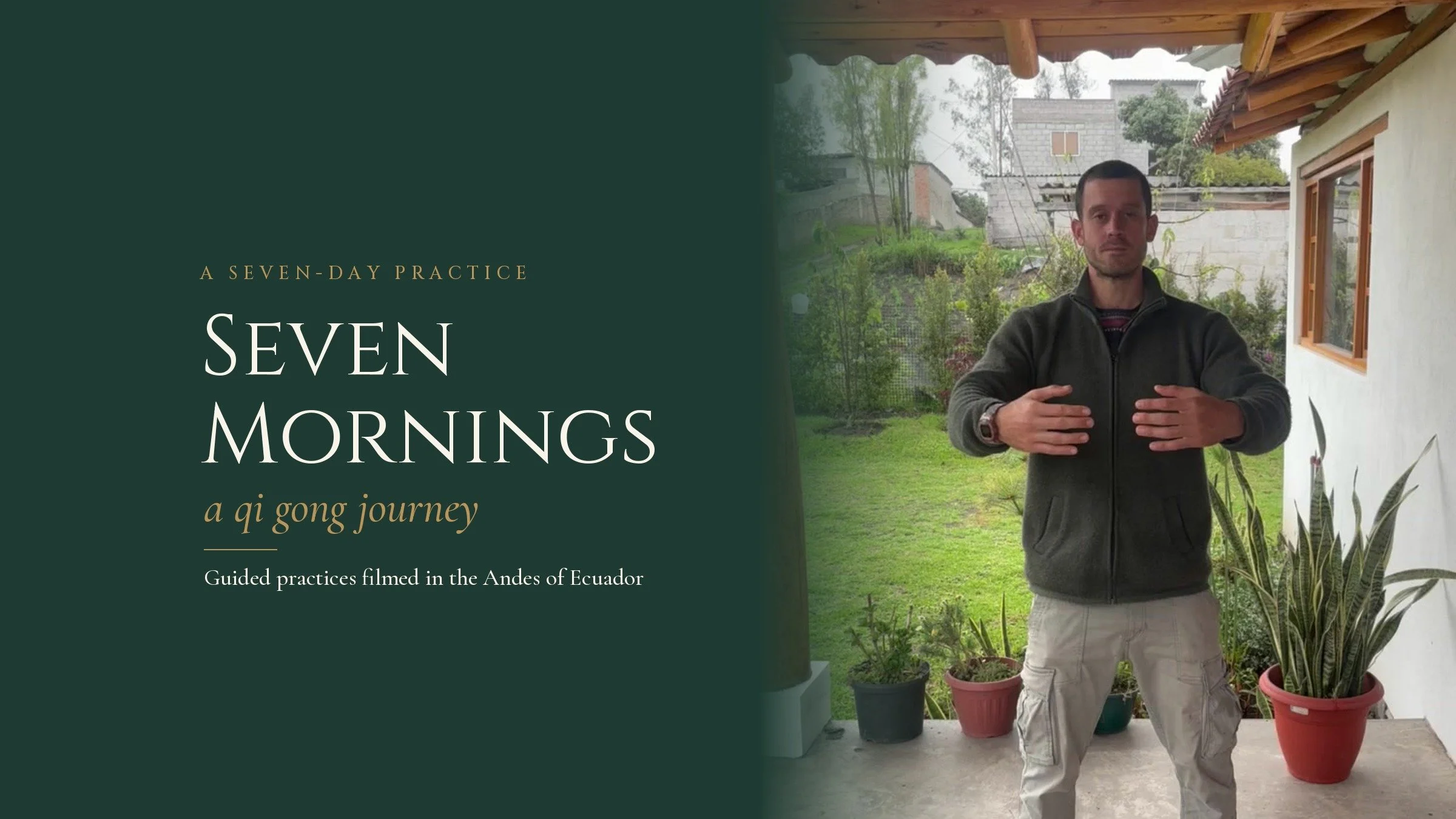
Seven Mornings — A Qi Gong Journey
A grounded seven-morning introduction to Qi Gong: one guided practice each day, with clear teaching on breath, posture, centre, movement, and the body’s energetic language. We will draw on classical Chinese texts with care, naming sources and translations and explaining what they can—and cannot—tell us. Begin gently, wherever you are.
-
-
-
Day 1 · Opening the Practice
Learn the frame for every session: a short warm-up, settling into the dantian, the nine opening breaths, and the closing. 8 minutes.
Learn the frame for every session: a short warm-up, settling into the dantian, the nine opening breaths, and the closing. 8 minutes.
-
Day 2 · Loosening the Joints
Wake the body after sleep. A complete warm-up for the hips, legs and spine. 12 minutes.
Wake the body after sleep. A complete warm-up for the hips, legs and spine. 12 minutes.
-
-
-
Day 3 · Standing Like a Tree
The opening, then zhan zhuang: rooting the feet and holding the ball. 8 minutes.
The opening, then zhan zhuang: rooting the feet and holding the ball. 8 minutes.
-
Day 4 · Waving Hands in Clouds
Warm-up, opening, then cloud hands from Tai Chi, polishing the sphere around you. 12 minutes.
Warm-up, opening, then cloud hands from Tai Chi, polishing the sphere around you. 12 minutes.
-
-
-
Day 5 · Moving Qi Through Space
Forward, sides, up, back. The breathing cycle at the root of qigong. 12 minutes.
Forward, sides, up, back. The breathing cycle at the root of qigong. 12 minutes.
-
The eight pieces of brocade, the classic qigong for longevity. 15 minutes.
-
Day 7 · The Song of the Eight Powers
A Tai Chi form that holds the centre and grounds you, plus closing words. 14 minutes.
A Tai Chi form that holds the centre and grounds you, plus closing words. 14 minutes.
-
A practice, a text, a way of seeing
One practice each morning
Ten guided videos: three short welcome videos, then one practice for each of the seven mornings, 8 to 15 minutes each.
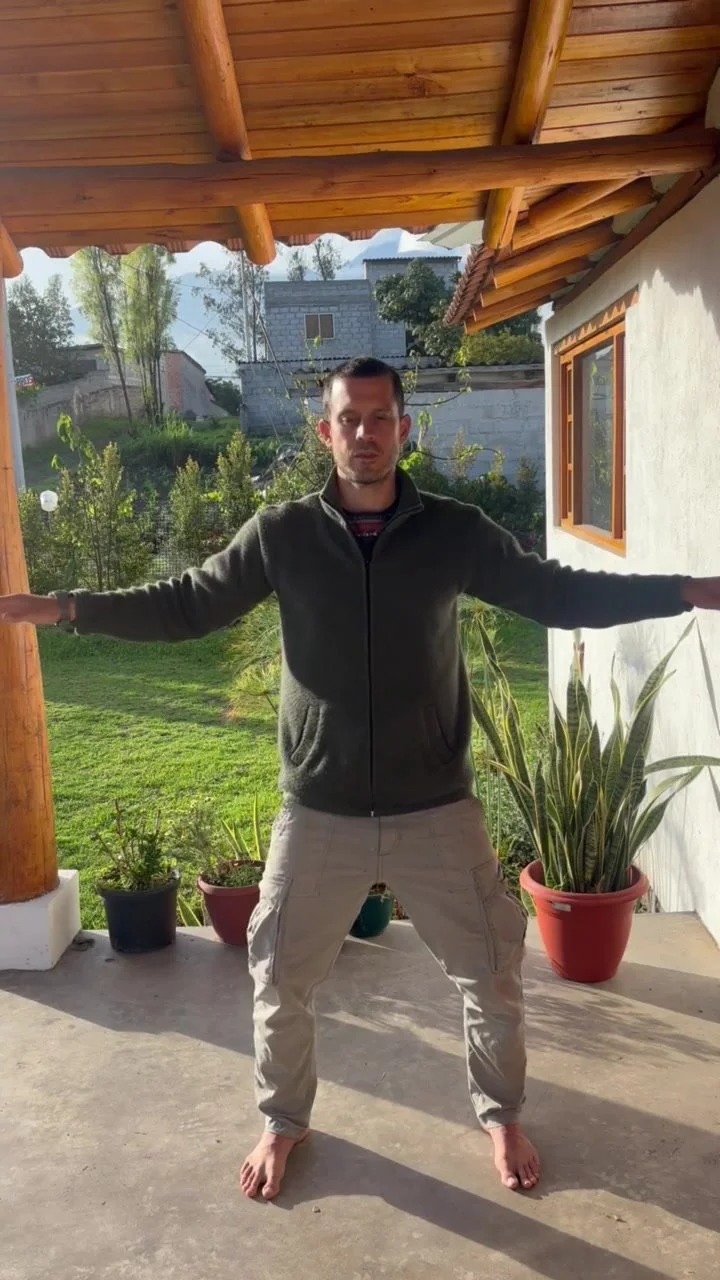
Classical context
We will read selected ideas from texts such as the Daodejing and Huangdi Neijing with care, context, and named translations—without pretending a modern practice is identical to an ancient one.
The energetic map
Explore breath, posture, attention, qi, and the lower dantian as practical frameworks, while distinguishing traditional language from modern anatomical claims.